Alcohol withdrawal, hour by hour
What actually happens when a heavy drinker stops, when it becomes dangerous, and why the first three days matter more than the rest. Based on NICE clinical guideline CG100.
If someone is withdrawing right now
If someone is confused, hallucinating, has a fever, or has had a seizure during withdrawal, call 999. Do not wait.
The timeline
What happens, and when
Withdrawal does not arrive all at once. It builds, peaks and then eases — and the peak is the part that carries risk.
6–12 hours
Tremor, sweating, anxiety, nausea and difficulty sleeping typically begin.
12–24 hours
Risk of alcohol withdrawal seizures begins to rise.
24–72 hours
The most dangerous window. Seizure risk peaks, and delirium tremens typically emerges at around 48–72 hours.
4–7 days
Physical symptoms usually begin to settle, though sleep and mood often take longer.
Timings are typical, not guaranteed. Withdrawal varies with how much and how long someone has been drinking, their physical health, and what has happened during previous attempts to stop.
Why the first 72 hours matter
Seizures and delirium tremens
Most people who cut down or stop drinking feel rough for a few days and then feel better. For a smaller group — generally those drinking heavily every day, over a long period — withdrawal can become genuinely dangerous.
Delirium tremens is a medical emergency and, untreated, alcohol withdrawal seizures and delirium tremens can be fatal. NICE advises admission to hospital for medically assisted withdrawal for people assessed as being at high risk.
Two things drive that. The first is withdrawal seizures, which can begin from around twelve hours after the last drink. The second is delirium tremens — severe confusion, agitation, hallucinations, fever and a racing heart — which typically appears at 48 to 72 hours.
This is the part that gets underplayed on a lot of websites, usually because it is frightening and does not make for comfortable reading. But it is the single most important thing to know before deciding how to stop, and knowing it changes what people do.
Higher risk if any of these apply
- Previous delirium tremens
- Previous alcohol withdrawal seizures
- Drinking heavily every day
- Existing liver disease
- Older age
- Other physical or mental health conditions
If one or more of these describes you, get medical advice before you stop rather than after. That can be your GP, a community service, or a private clinic — but not nobody.
Clinical information on this page follows NICE CG100 — Alcohol-use disorders: diagnosis and management of physical complications. It is general information, not medical advice about your situation.
Medically assisted withdrawal
What a supervised detox actually involves
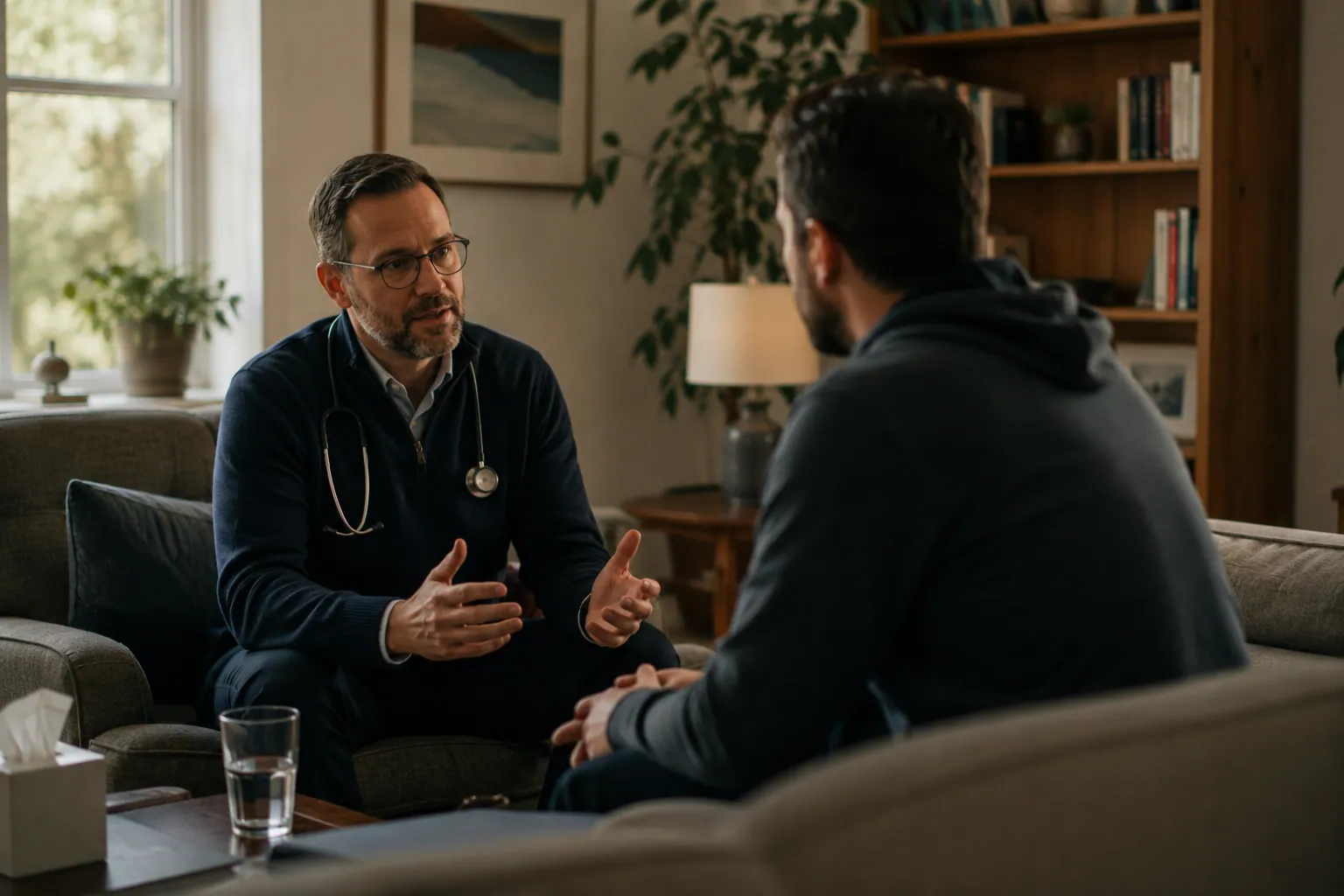
A medically assisted detox is not dramatic. In practice it means a prescribed benzodiazepine — usually chlordiazepoxide, sold as Librium — given on a reducing schedule over several days, alongside monitoring of your symptoms, blood pressure and hydration, and often thiamine to protect against neurological damage.
The point of the medication is to hold withdrawal at a manageable level while your body adjusts, and to cut the risk of seizures. The point of the monitoring is that someone notices early if things start heading the wrong way.
Detox is not treatment on its own, though. It deals with physical dependence over a week or so; it does nothing about the reasons the drinking started or continued. That is what the rehabilitation part of treatment is for, and why stopping cold turkey rarely holds on its own.
Free help, if that is where you want to start
Private treatment is not the only route, and it is not the right one for everyone. These services cost nothing.
- Change Grow Live Coventry — 024 7601 0241self-referral, no GP neededCoventry's free, confidential drug and alcohol service for adults, families and affected others. Offers assessment, community detox support, keywork, healthcare clinics, group sessions, needle exchange, family support and aftercare.1 Lamb Street, Coventry CV1 4AE
- Drinkline — 0300 123 1110Free, confidential national alcohol helpline.
- Alcoholics Anonymous — 0800 917 7650Free peer support, with meetings across Coventry and Warwickshire.
- FRANK — 0300 123 6600Free, confidential drugs information and advice, 24 hours a day.
If you are trying to work out which route makes sense, we have set out every option in Coventry — free, council-funded and private — with honest timescales for each.
Questions
Common questions about withdrawal
If stopping safely is the worry, say so
A first conversation is mostly questions about how much, how long, and what happened last time you stopped. That is what determines whether a detox needs medical supervision.
Calls go to The Wellbourne Clinic in Kenilworth, Warwickshire. If you would rather start with free local support, we have set out those options too.